
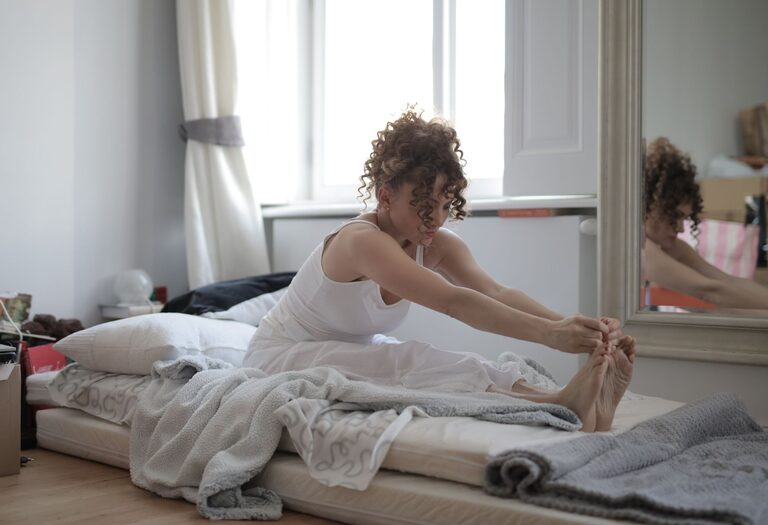
Waking up feeling stiff is common, especially after a long night in one position or a busy day spent sitting. The good news is that you do not need a complicated routine or a large block of free time to move more comfortably in the morning.
A few simple stretches can help you ease into the day, become more aware of your posture, and create a calming morning habit. The key is to keep the movements gentle, steady, and easy to repeat.
Why Morning Stretching Can Help
During sleep, your body may stay in one position for several hours. When you first get up, your muscles and joints may feel less mobile than they do later in the day. Light movement can help you gradually warm up and prepare for everyday activities.
Morning stretching may also help you:
– Wake up your body without rushing
– Loosen areas that feel tight after sleeping
– Improve your awareness of posture
– Add movement to a sedentary morning
– Create a quiet moment before the day begins
– Build a consistent self-care habit
Stretching should feel comfortable and controlled. It should not feel sharp, forceful, or painful. If a movement causes discomfort, stop and try a smaller range of motion or a different stretch.
Start With Gentle Movement
Before holding any stretches, spend a minute moving naturally. This helps your body transition from rest to activity without demanding too much too soon.
Try this simple warm-up:
- Sit on the edge of your bed or stand beside it.
- Take several slow breaths.
- Roll your shoulders forward and backward.
- Open and close your hands.
- Circle your ankles in both directions.
- Turn your head gently from side to side.
Move slowly and avoid forcing any position. The goal is not to stretch as far as possible. Instead, focus on smooth movement and relaxed breathing.
Easy Stretches for a Stiff Morning
1. Overhead Reach
This simple stretch lengthens the sides of your body and helps you practice standing tall.
– Stand with your feet about hip-width apart.
– Let your arms rest at your sides.
– Slowly raise both arms overhead.
– Reach upward without lifting your shoulders toward your ears.
– Hold for 10 to 20 seconds while breathing comfortably.
– Lower your arms slowly.
You can also perform this stretch while sitting. If your shoulders feel tight, keep your arms slightly in front of you instead of reaching directly overhead.
2. Side Reach
A side reach adds gentle movement through your ribs, waist, and upper body.
– Stand or sit with a straight but relaxed posture.
– Raise your right arm.
– Lean slightly to the left without twisting your torso.
– Keep both feet grounded if standing.
– Hold for a few comfortable breaths.
– Return to the center and switch sides.
Keep the movement small. You should feel a mild stretch along the side of your body, not pressure in your back or shoulder.
3. Seated Spinal Turn
This stretch can help you gently move your upper body after a night of limited movement.
– Sit near the edge of a chair with both feet on the floor.
– Place your hands on your thighs.
– Turn your chest slowly to the right.
– Keep your hips facing forward.
– Hold briefly, then return to the center.
– Repeat on the left side.
Avoid pulling yourself deeper into the turn. Let your upper body rotate naturally while keeping your breathing steady.
4. Standing Calf Stretch
Your calves can feel tight after sleeping, particularly if you spend much of the day sitting.
– Face a wall or sturdy surface.
– Place both hands on it for support.
– Step your right foot back.
– Keep the back heel on the floor and the toes pointing forward.
– Bend your front knee slightly.
– Hold for 15 to 20 seconds, then switch sides.
If the stretch feels too strong, take a shorter step backward. Keep your movements controlled and use the wall for balance.
5. Gentle Front-of-Hip Stretch
Sitting for long periods can make the front of the hips feel less mobile. This simple position offers a gentle way to open that area.
– Stand behind a chair and hold it for support.
– Step your right foot back.
– Keep your upper body upright.
– Bend your front knee slightly.
– Tuck your hips gently under, without arching your lower back.
– Hold for several comfortable breaths.
– Switch sides.
Do not push your hips forward. A small adjustment is often enough to create a mild stretch.
6. Back-of-Leg Stretch
You can stretch the back of your legs without reaching for your toes.
– Stand with one heel resting on a low step or firm surface.
– Keep your supporting leg slightly bent.
– Hinge forward from your hips while keeping your back relaxed.
– Stop when you feel a gentle stretch behind the raised leg.
– Hold briefly, then change sides.
If balance is a concern, keep both feet on the floor and place one heel slightly forward instead.
Create a Five-Minute Routine
A short routine is easier to maintain than an ambitious plan. Try the following sequence:
– One minute of shoulder, ankle, and neck movements
– Two overhead reaches
– Two side reaches on each side
– Two seated spinal turns on each side
– One calf stretch on each side
– One gentle front-of-hip stretch on each side
Move at a comfortable pace rather than watching the clock closely. If you have more time, repeat the sequence or hold each position for a few extra breaths.
Make the Habit Easier to Keep
The best stretching routine is one you can repeat. Use simple reminders and connect stretching to something you already do each morning.
Consider these ideas:
– Stretch beside your bed before getting dressed.
– Keep comfortable clothes nearby.
– Place a reminder on your phone or calendar.
– Stretch while the coffee or tea is brewing.
– Play one calm song and move until it ends.
– Track your routine with a simple check mark.
– Start with two minutes and build gradually.
You do not need to stretch perfectly every day. Missing a morning does not erase your progress. Simply return to the routine the next day.
Practice Safe, Comfortable Stretching
Use slow, relaxed movements and breathe normally. Avoid bouncing, jerking, or forcing a joint into an uncomfortable position. Stretching should create mild tension, not sharp pain.
If you feel dizzy, unsteady, or unusually uncomfortable, stop and sit or rest. People with an injury, ongoing discomfort, or specific movement concerns may want to ask a qualified professional for personalized guidance before beginning a new routine.
The purpose of morning stretching is to help you begin the day with awareness and ease. Keep the routine simple, listen to your body, and focus on consistency. Even a few minutes of gentle movement can become a positive part of your morning.
About the Author